English
 中文
中文 Español
 русский
 français
 português
 العربية
 Deutsch
 italiano
 한국어
한국어 Polska
×
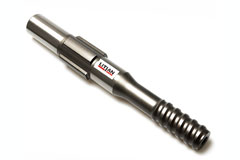
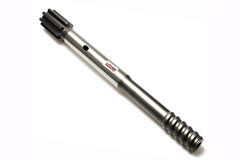
A rock drill shank is a critical component in hydraulic rock drills that transmits rotational torque and percussive impact energy from the piston to the drill string. Abnormal breakage—typically at the thread root or along the thread body—is a failure mode that can occur within ten shifts under adverse operating conditions.
The rock drill shank (also called a shank adapter) is a critical component of hydraulic rock drills, responsible for transmitting rotational and impact energy. During operation, it endures complex loads delivered by the impact piston and rotary motor of the rock drill. A typical failure mode of rock drill shanks is abnormal breakage, often occurring within a working period of fewer than ten shifts. The fracture generally occurs at the thread root or along the thread itself.
| Failure Cause | Why It Happens | Preventive Measure |
| Loose Connections | Impact forces loosen the bolts connecting the rock drill to the mounting plate, causing operational wobble. | Inspect bolt torque every 40 impact-hours. Ensure idle feed pressure < 3 MPa. |
| Excessive Guide Sleeve Wear | Worn inner bore creates excessive clearance, allowing the shank front end to wobble. | Replace the guide sleeve every 800 impact-hours. |
| Insufficient Lubrication | Inadequate lubrication causes overheating, reduced material strength, and eventual failure. | Check lubrication spray before each shift. Verify an even oil film on the shank. |
| Mismatched Feed & Impact Pressure | Imbalance causes "dry strikes," subjecting the shank to unnecessary impact loads. | Adjust feed pressure to rock conditions: decrease for hard rock, increase for soft rock. |
| Incorrect Rock Drill Installation | Misalignment of shank centerline with front and intermediate holders adds radial forces. | Verify alignment during installation and after every 40 impact-hours of operation. |
Lubrication Check Before Each Shift
Before starting the machine, check the lubrication spray at the machine head. Observe the oil film on the rock drill shank to ensure it is even and meets lubrication requirements before drilling operations commence.
Regular Inspection of Bolts and Alignment
Inspect the connection between the rock drill mounting bolts and the mounting seat every 40 impact-hours of operation. Ensure normal bolt torque, alignment of the rock drill shank's center with the axes of the front and intermediate shank holders, and an idle feed pressure of less than 3 MPa.
Adjust Feed Pressure Based on Rock Conditions
During drilling, adjust the feed pressure in response to rock conditions. Decrease the feed pressure for hard rock and increase it for soft rock to avoid "dry strikes."
Routine Replacement of the Guide Sleeve
Regularly inspect the inner diameter of the rock drill shank guide sleeve and replace it every 800 impact-hours of operation. This prevents wobbling caused by excessive wear in the guide sleeve's bore.
By adhering to these preventive measures and conducting regular maintenance, abnormal breakage of rock drill shanks can be minimized, improving both the efficiency and longevity of hydraulic rock drills.
What causes a rock drill shank to break?
The five most common causes are loose mounting connections, excessive guide sleeve wear, insufficient lubrication, mismatched feed and impact pressure, and incorrect rock drill installation causing misalignment.
How often should I replace the guide sleeve to prevent shank breakage?
Replace the guide sleeve every 800 impact-hours of operation, or sooner if inner bore inspection shows wear beyond the manufacturer's specified limit.
What is the correct feed pressure setting to avoid shank damage?
Adjust feed pressure according to rock hardness. Use lower feed pressure in hard rock and higher feed pressure in soft rock. Ensure idle feed pressure is below 3 MPa to prevent "dry strikes."
How can I tell if my rock drill shank is getting proper lubrication?
Before each shift, check the lubrication spray at the machine head. An even, visible oil film on the shank surface indicates adequate lubrication. Dry spots or insufficient film mean the lubrication system needs attention.

Litian is a professional manufacturer focused on the production of rock drilling tools and excavation tools.
Learn More >