English
 中文
中文 Español
 русский
 français
 português
 العربية
 Deutsch
 italiano
 한국어
한국어 Polska
×
Cross-type drill bits are rock drilling tools with a chisel-shaped tungsten carbide tip arranged in a cross pattern, engineered to deliver high-impact cutting efficiency and wear resistance in hard, abrasive rock formations such as granite and quartzite.
Cross-type drill bits are specialized tools designed for drilling through hard and abrasive rock formations, making them a top choice for professionals seeking the best drill bit for hard stone. Their chisel-shaped design excels in challenging conditions, ensuring efficient rock drilling in mining and quarrying. This article explores how to drill rock using cross-type drill bits, their features, applications, and maintenance strategies, highlighting their role in drilling holes in rocks.
Cross-type drill bits feature a tungsten carbide chisel tip that forms a cross pattern, enhancing cutting efficiency in hard-rock abrasive formations. Used primarily with hammer drills, these bits are ideal for drilling rock, particularly in deep-hole applications such as quarrying or mining blast holes. Available in diameters from 30–100 mm, they are designed to withstand intense wear, making them suitable for drilling through hard stone like granite or quartzite.
The cross design distributes impact forces evenly, reducing bit wear and ensuring stable performance when drilling into rock with high abrasion.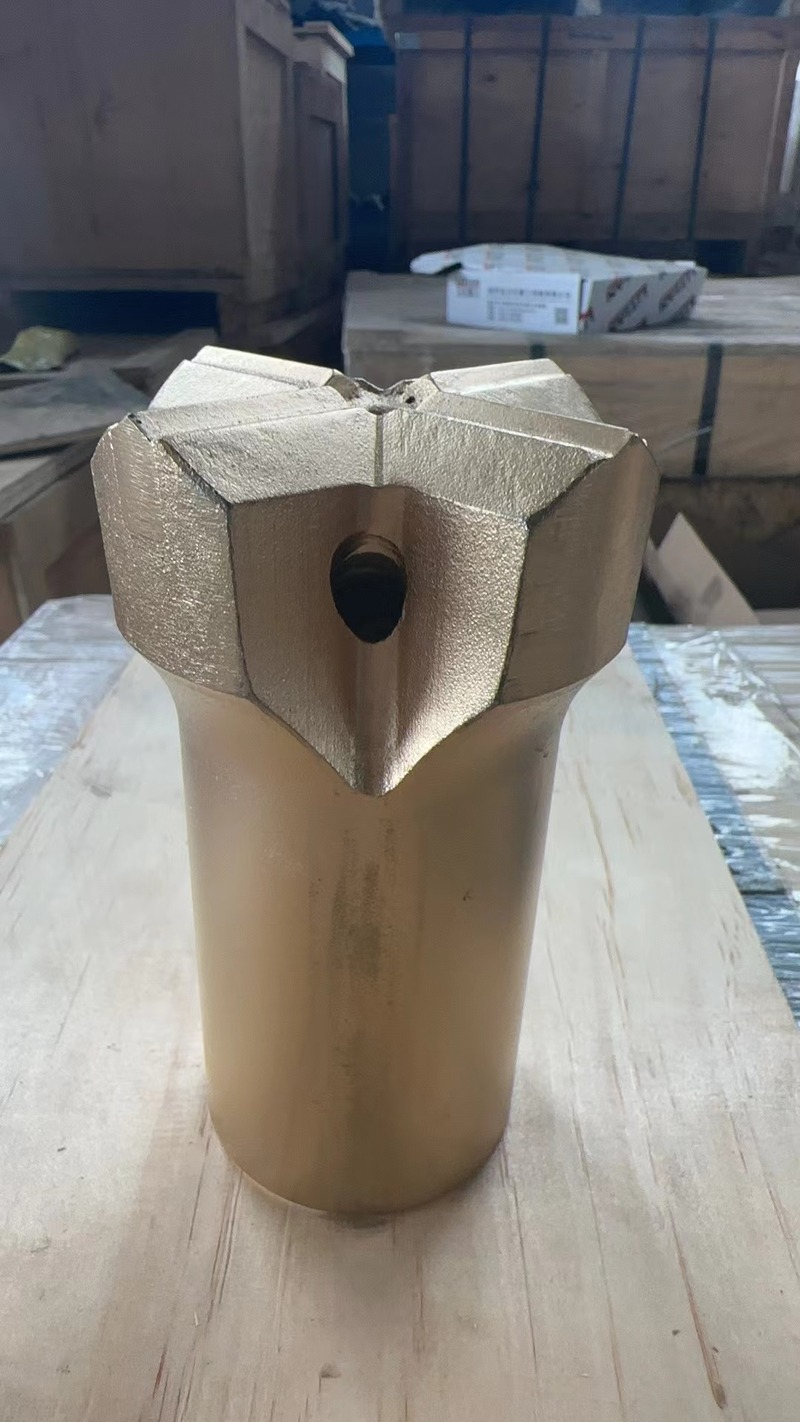
| Industry | Specific Application | Benefit of Cross-Type Bit |
| Quarrying | Deep-hole drilling for rock splitting and explosive placement in granite/marble quarries | Even force distribution prevents hole deviation in hard stone |
| Mining | Blast hole creation in abrasive mineral formations | High wear resistance reduces bit changes, improving shift productivity |
| Construction | Anchoring and foundation drilling in solid rock | Precise hole placement with minimal bit wandering |
| Geotechnical Studies | Subsurface rock sampling in abrasive ground | Durable carbide tips ensure consistent penetration rates for reliable core data |
Wear Resistance: Tungsten carbide tips withstand abrasive conditions, making them the best drill bit for rocks in high-wear environments.
High Impact Efficiency: The cross-shaped design delivers a strong cutting force, ideal for drilling through hard stone.
Stability: Reduces bit wandering, ensuring precise drilling of a hole in rock.
Versatility: Suitable for deep-hole drilling in both surface and underground applications.
To maintain cross-type drill bits:
Inspect Carbide Tips After Each Shift: Look for chipping, cracks, or uneven wear on the cross-shaped tip. Replace bits when the wear flat reaches 1/3 of the insert diameter.
Clean Flushing Holes Thoroughly: Use compressed air or water to remove rock cuttings from flushing channels after each use, especially in wet drilling conditions where debris can harden.
Resharpen at the Right Time: Use a specialized grinding machine to restore the tip profile before excessive wear sets in. Do not resharpen worn-down inserts below the manufacturer's minimum projection height.
Store Dry and Protected: Keep unused bits in a dry, covered environment. Apply a light rust-preventive coating to the steel body and threads if storing for extended periods.
Maintenance can extend bit life by up to 25%, reducing costs in rock drilling bit applications.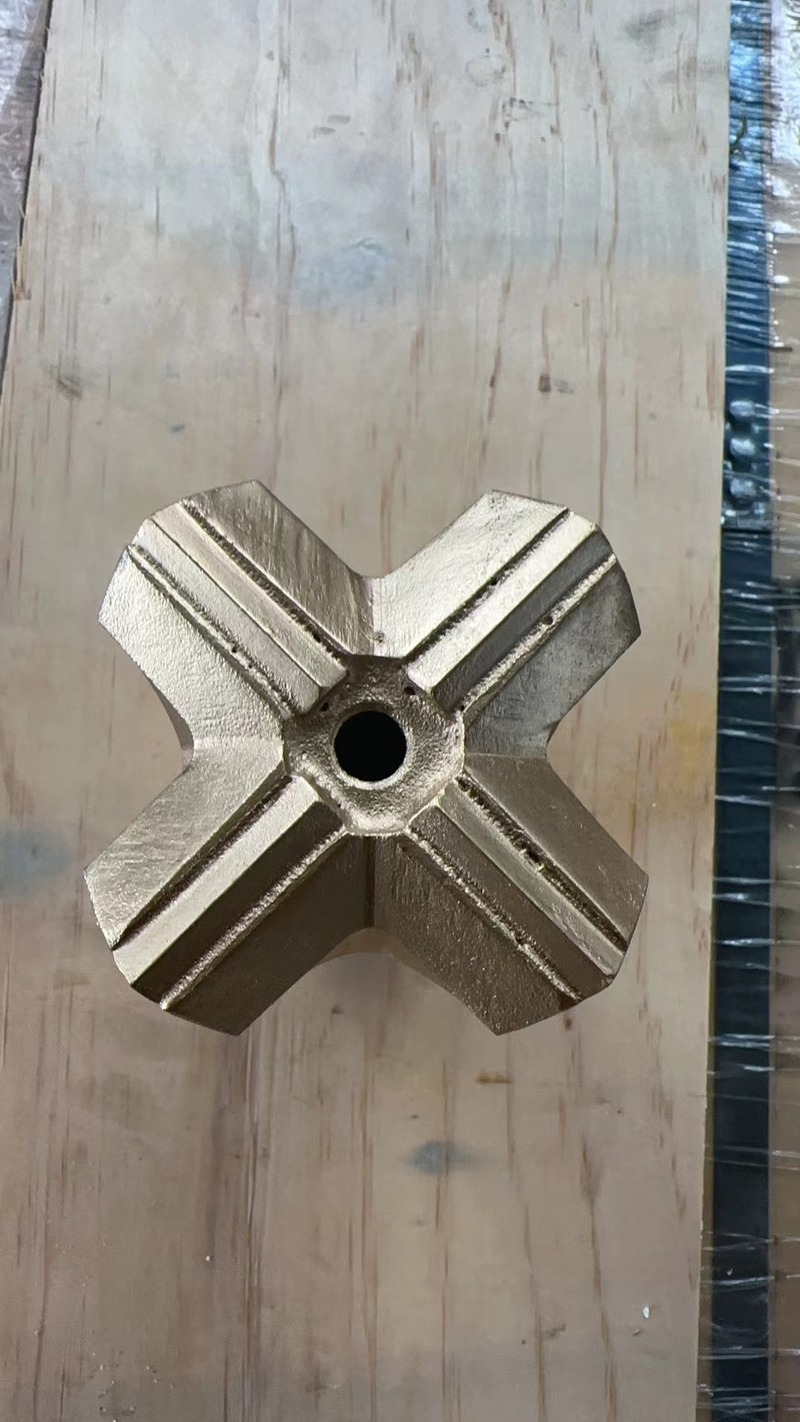
What is a cross-type drill bit?
A cross-type drill bit is a percussive drilling tool with a tungsten carbide tip arranged in a cross pattern. It is designed for drilling hard, abrasive rock like granite and quartzite, offering high wear resistance and stable hole alignment.
When should I choose a cross-type drill bit over a button bit?
Cross-type bits are typically preferred in highly abrasive, fractured rock formations where button bits may suffer from insert breakage or excessive body wear. The cross design provides a more robust cutting structure that withstands impact shocks in broken ground.
Are cross-type drill bits good for granite?
Yes. Granite's high uniaxial compressive strength (often >180 MPa) and abrasive silica content make cross-type bits an excellent choice. The chisel-shaped carbide tip efficiently fractures the rock while the cross pattern stabilizes the bit in the hole. Learn more: Using Top Hammer Quarrying Tools in Granite Quarries →
What diameters are available for cross-type drill bits?
Cross-type bits are commonly available in diameters ranging from 30 mm to 100 mm, suitable for various blast hole sizes and anchoring applications. Litian offers multiple thread configurations (including R32, T38, T45) to match a wide range of drilling rigs. Browse our selection: Cross-Type Drill Bits →
How long does a cross-type drill bit last in abrasive rock?
Lifespan depends on rock abrasivity, operator skill, rig parameters, and maintenance practices. Under proper use in moderately abrasive rock, a quality cross-type bit can drill 100–300 meters before requiring resharpening or replacement. Regular inspection of the carbide tip is the best way to maximize life.
Can cross-type drill bits be resharpened?
Yes. Cross-type bits can be resharpened using diamond or silicon carbide grinding wheels. However, once the carbide inserts wear below the manufacturer's recommended projection height, the bit must be replaced to avoid steel body wash and loss of gauge.
SPE OnePetro — Durable Materials for Hard Abrasive Rocks (2003)
Int. Journal of Refractory Metals & Hard Materials — Abrasive wear of hardmetals (2025)
HAL Science — Penetration rate prediction for percussive drilling in hard rock (2017)
Springer — Abrasivity evaluation for wear prediction of drill bits (2020)

Litian is a professional manufacturer focused on the production of rock drilling tools and excavation tools.
Learn More >